Author: Wanting Yin

  • Animation Industry and Career Pathways

    Regarding sectors of the industry, I am interested in both commercial animation and game animation. Social media is thriving these days, so I have recently considered becoming an independent animator and running my own small studio. I would share original stories and character animations on social platforms, reserving space for personal creative work alongside commercial commissions.

    There are many prominent studios and game companies in China, including Tencent Games, NetEase Games and Lilith Games. This summer, I was fortunate to intern at NetEase Games, which gave me direct, in-depth insight into the latest developments within the industry. I do not play games very often myself, so within game animation, I lean towards transition sequences and cinematic CG production. During my internship, I learned that modern game animation is far more than just creating character movements. Increasing emphasis is placed on narrative atmosphere, cinematography and artistic style. Real-time rendered cutscenes, high-quality CG shorts and stylised character performance have become core competitive strengths for major companies. The industry also values creative thinking and cross-team collaboration, which helped me build a fuller understanding of commercial production pipelines.
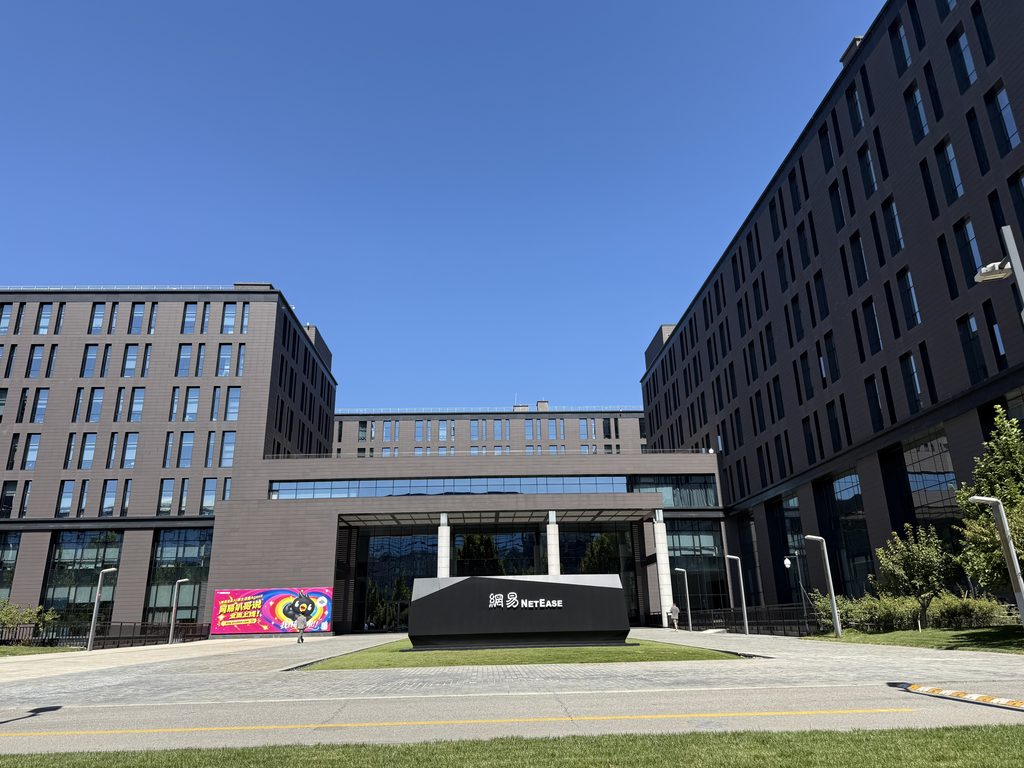
    NetEase Building
    The roles I hope to pursue include director, animator and storyboard artist. I have researched these positions carefully. Animators bring life to scenes by crafting character movement, facial expressions and motion. An animation director oversees the overall style, pacing and narrative tone, guiding the visual and emotional direction of the whole piece. Script development lays the story foundation, refining plotlines and character design and forming the creative backbone of the project. Animatic work covers previsualisation: rough edited shots and moving sketches establish timing, camera placement and narrative logic, bridging the script and final production.

    I enjoy innovation, scriptwriting and developing original stories and characters, so these roles all appeal to me. Going forward, I aim to build experience in commercial and game animation and strengthen my skills across different roles, while continuing my independent creative practice. I hope to balance my professional career with personal original work.
  • UK Animation Studio and Exploration of Aardman Animations

    I am also hoping to work in the UK in the future. This past year studying in London, I have grown to love the city and the local animation scene. Of all British animation studios, Aardman Animations is my favorite.

    I first discovered their work through Shaun the Sheep. As a child, I did not know it was stop-motion; I was just drawn to its light, funny stories and cute characters. It was only after I started studying animation and learned about stop-motion that I rewatched it and realized how much patience and handcraft lie behind that charm, which made me admire Aardman even more. A comment I read really stayed with me: the fingerprints on the puppets’ faces are the artisans’ proudest signature.

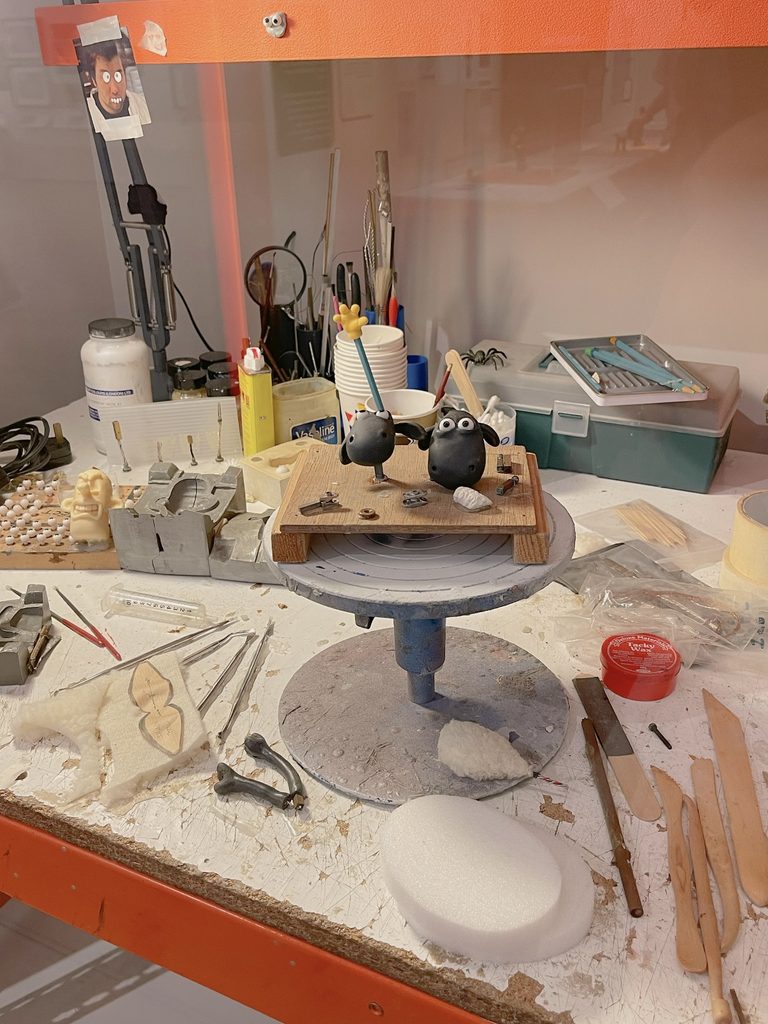
    Last semester I took the stop-motion pathway, where I built puppets, shot frame by frame and set up lighting myself, so I strongly connect with the way Aardman works. In stop-motion, every tiny expression and movement has to be adjusted by shifting the puppet little by little. It is slow and requires great care, but it gives the work a uniquely warm, solid texture—and that is why I love it. In an age of widespread AI, this kind of handmade craft feels especially precious.

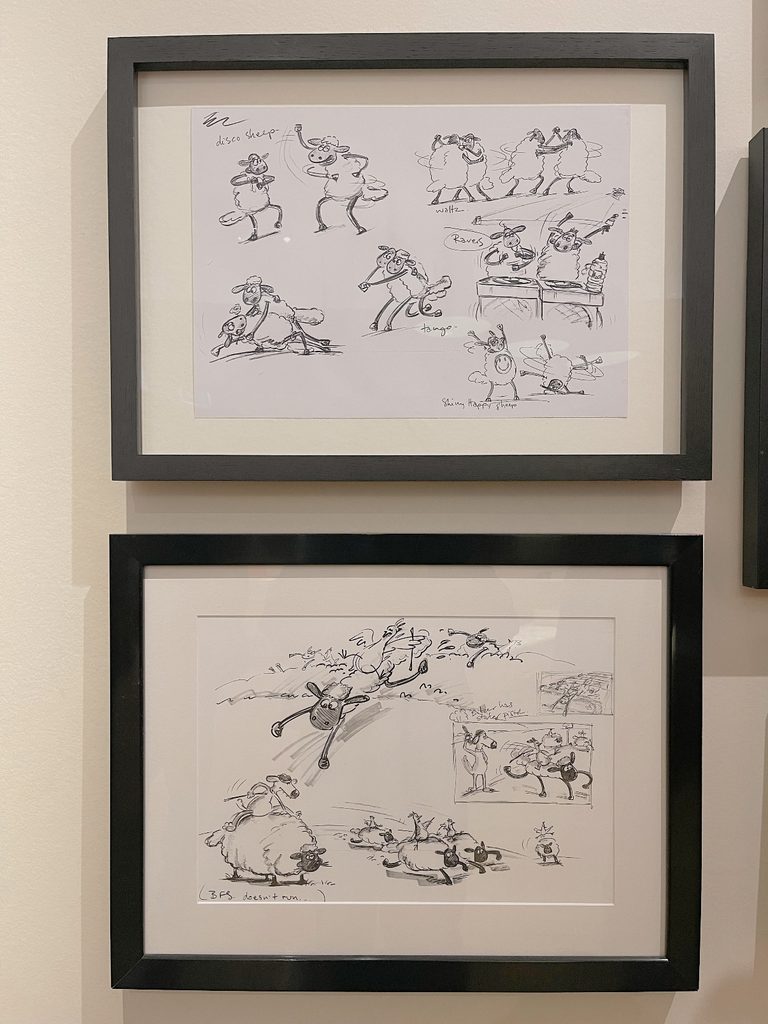
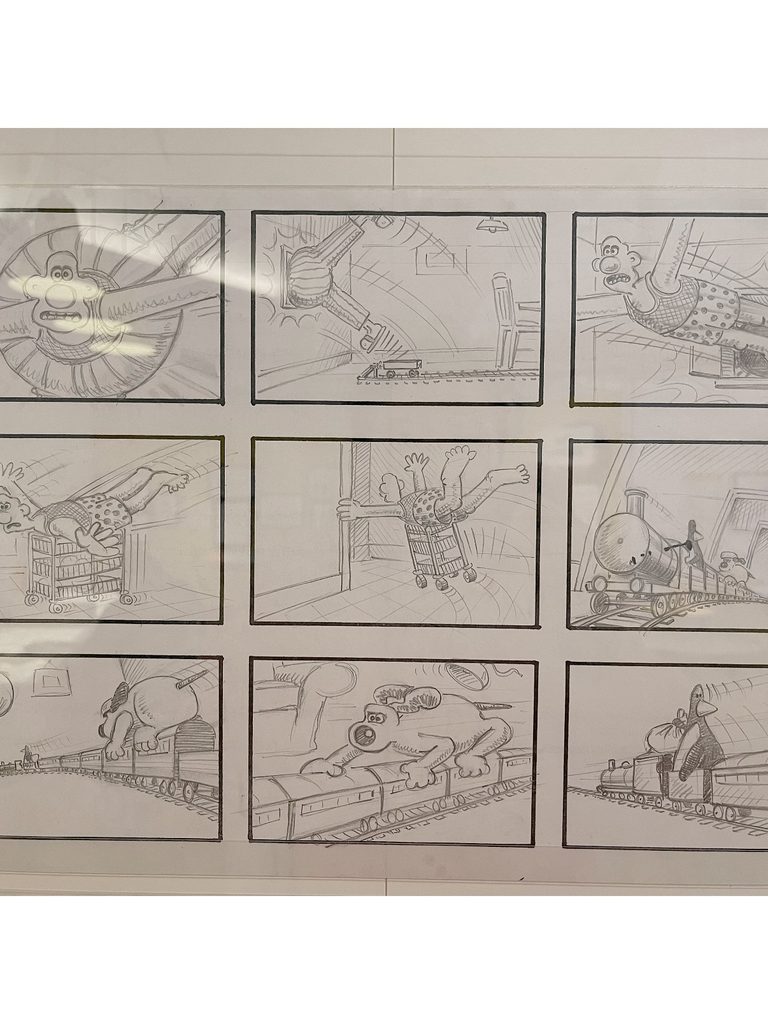
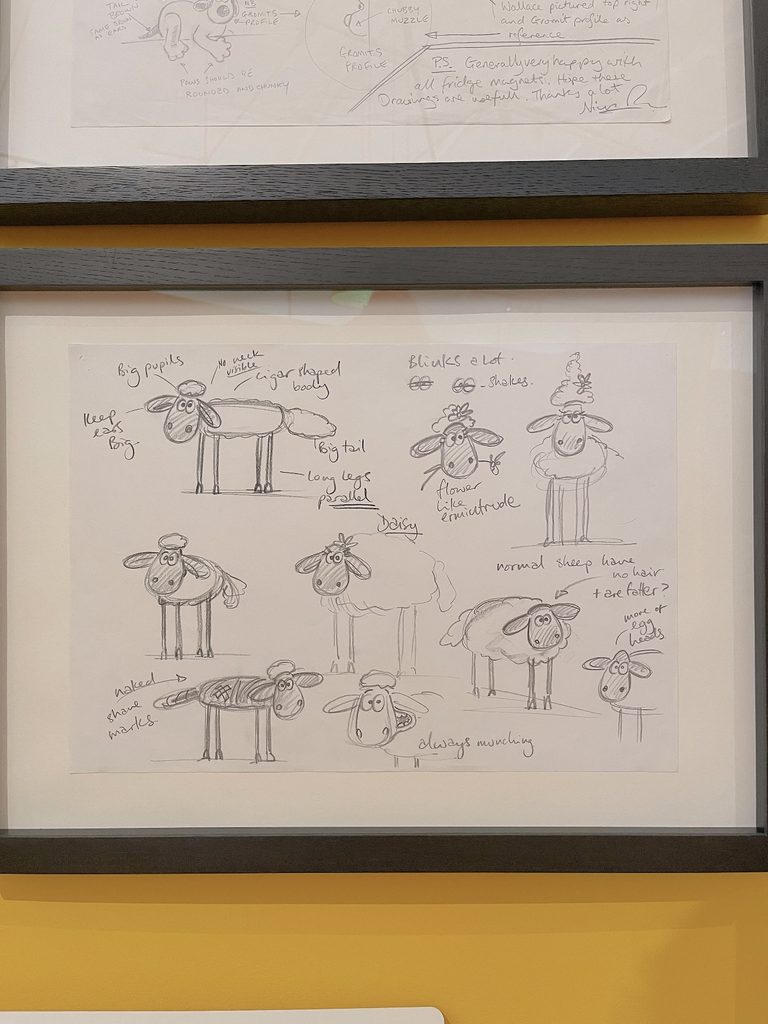
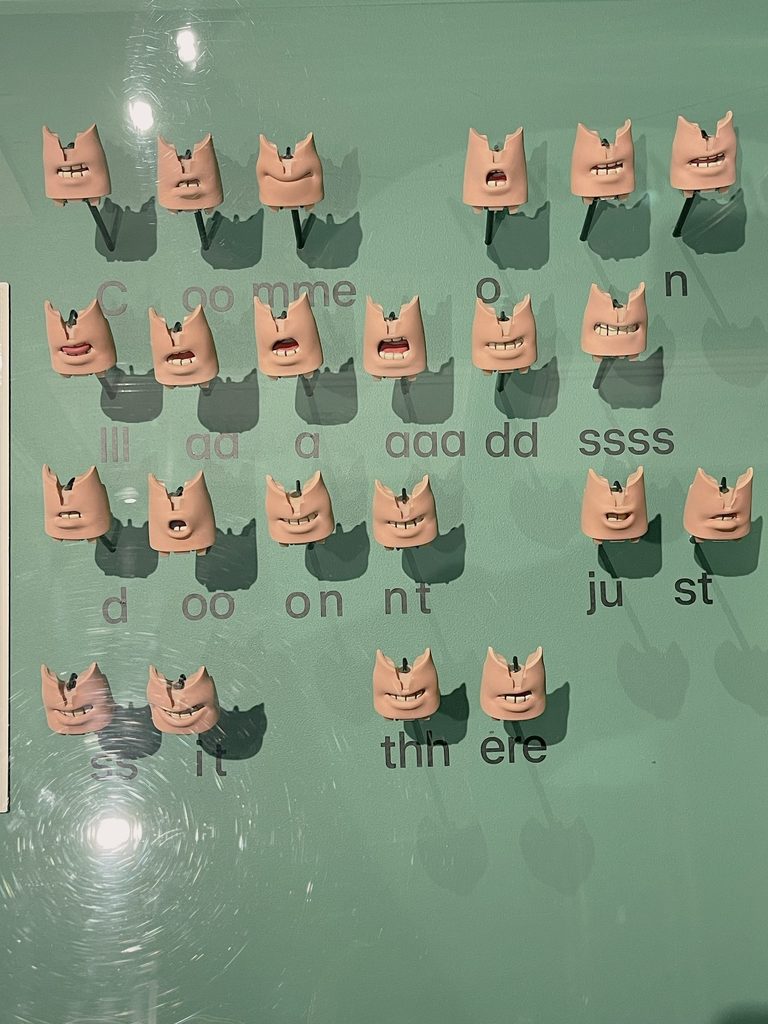
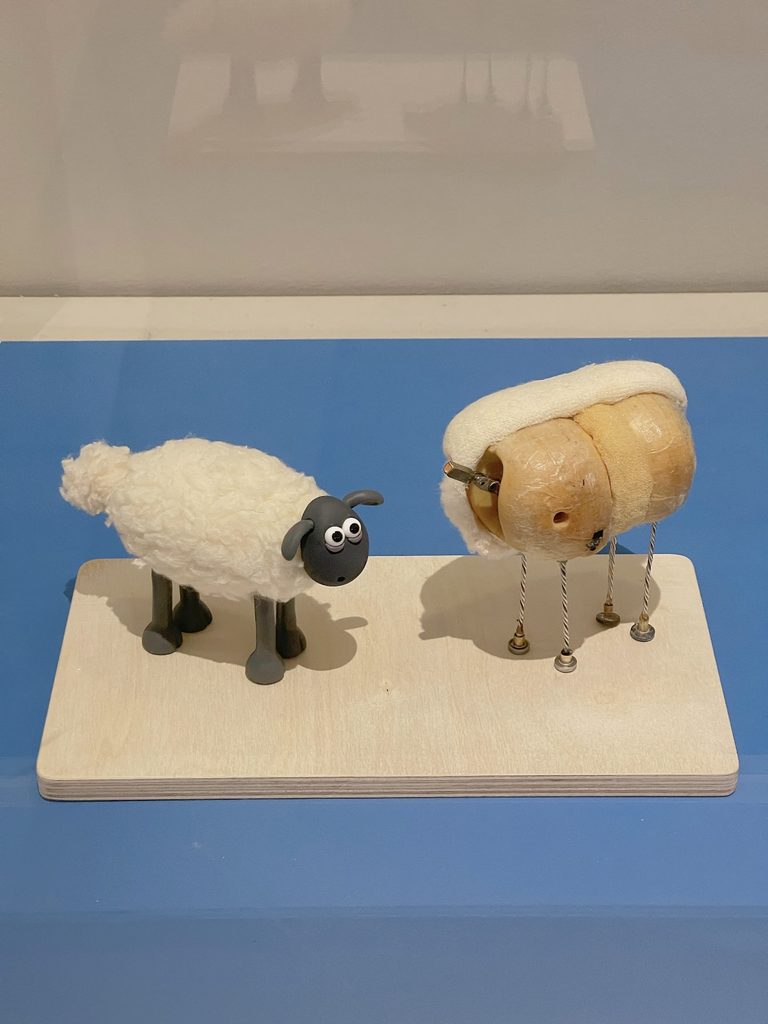
    This year I visited the Aardman exhibition at the Young V&A in London. It showed the whole creative process: early character sketches, expression designs, storyboards, clay models, armatures and material tests. Even a character’s eyes, mouth, proportions and wool texture had to be tried over and over. Besides finished puppets, there were many early sketches and storyboards, including design drawings for Wallace and Gromit; seeing these originals made me feel close to the production. I could sense the studio’s dedication to handcrafted texture—they do not chase speed, but take time to refine small expressions and gestures, giving their clay puppets real personality.

    Aardman’s stories are gentle and clever, conveying emotion through performance and imagery rather than complex dialogue. This respect for handcraft, faithfulness to character performance, and light-hearted imagination have deeply influenced me. I hope to join a similar team one day, apply my stop-motion skills, and create animation with the same warmth and handmade feel.

  • Preferred Work Location and Chinese Companies

    I am flexible with my workplace as long as I secure a suitable role, yet I would prefer to work in China or the UK.My target cities in China are Beijing, Shanghai, Hangzhou, Tianjin and Chengdu. These cities boast mature game and animation industries with abundant job opportunities. Shanghai is my top choice. It is modern and offers ample opportunities, hosting various animation events and exhibitions that would enable me in continuous learning.

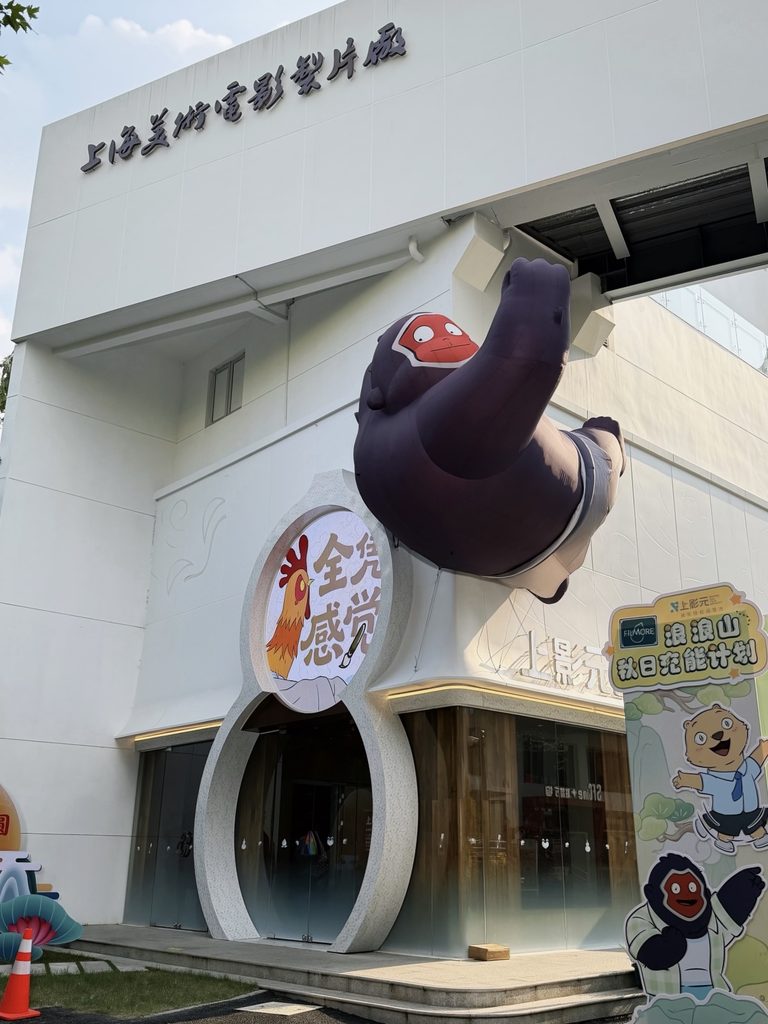
    I am particularly drawn to two animation studios in China : Shanghai Animation Film Studio and HMCH, the production team of The Legend of Hei.


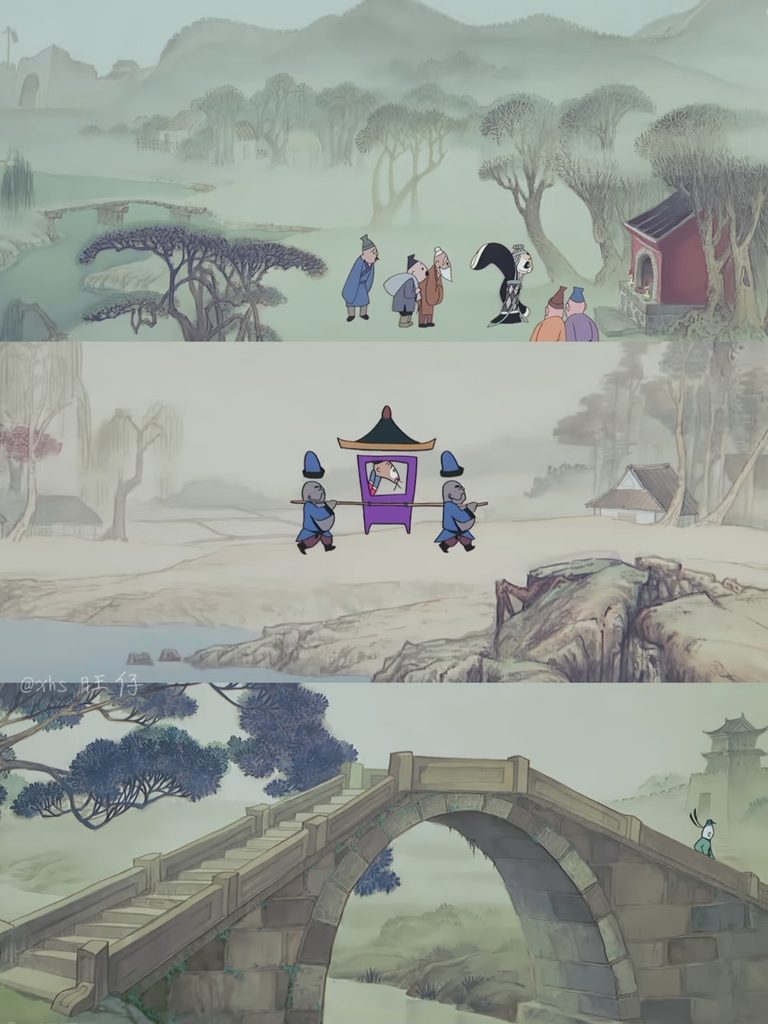
    Based in Shanghai, Shanghai Animation Film Studio is a long-established studio that has produced many classic animated works including Nezha Conquers the Dragon King, Big Ear Tutu, Calabash Brothers and Tales of the Heavenly Book. These works accompanied me throughout my childhood and hold important significance for me. I consider them outstanding in both narrative and visual design, integrating rich traditional Chinese aesthetics. Its recent releases such as The Piggy Demon’s Summer and Yao-Chinese Folktales are also remarkable. The studio also produces stop-motion works including paper-cut and ink-wash animation, which aligns perfectly with my pathway of stop-motion.

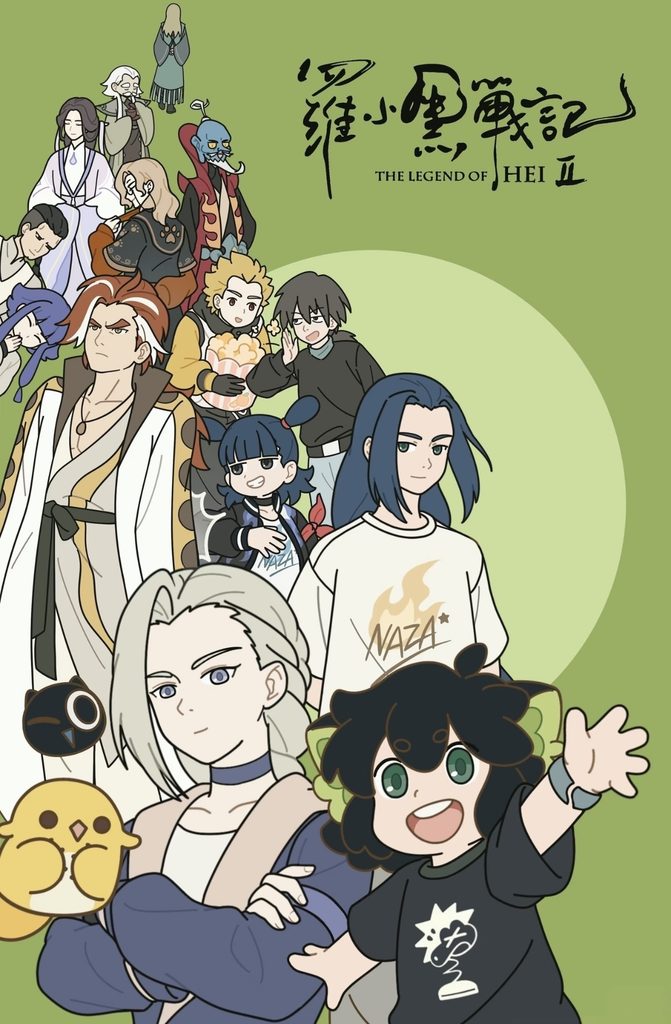
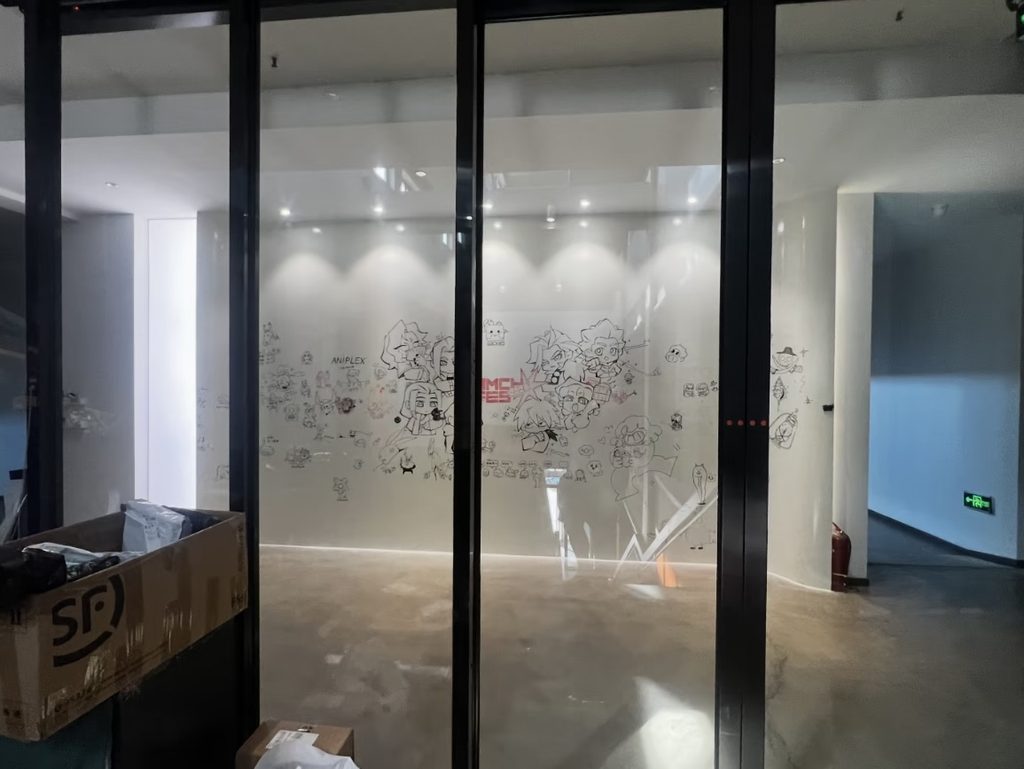
    HMCH is an independent Chinese animation studio headquartered in Tianjin. Its signature work The Legend of Hei combines fantasy, warmth and oriental charm, winning popularity globally. I admire its dedication to original hand-drawn animation and gentle, restrained storytelling. It is well-known within the industry for its pleasant working environment and generous employee benefits too, which appeal greatly to me.

    Screenshot
    HMCH Studio

    These are my two favourite Chinese animation studios. I sincerely hope to intern or work at either of them, so I keep track of their recruitment updates regularly.

  • Unit 1 Practice Based Research

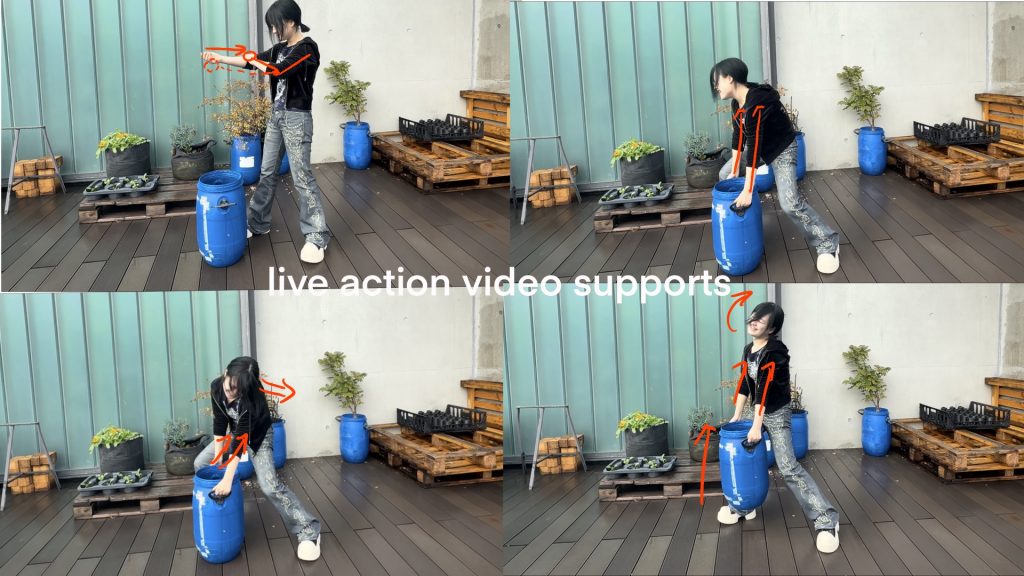
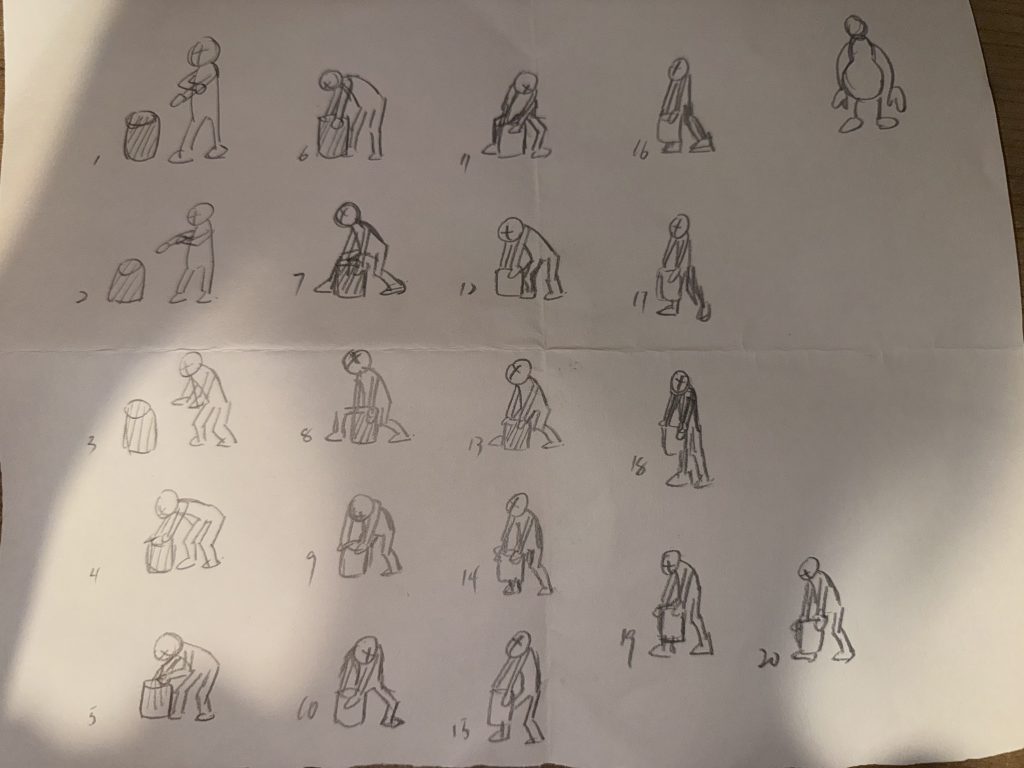
    Before we started working on the push, pull and lift animations, the teacher asked us to go outside the classroom to record some live action video supports. My friend and I took turns filming each other. During the process, we kept giving each other suggestions, such as some movements were not exaggerated enough or not natural enough. Finally, with my friend’s advice and help, I recorded a satisfactory reference video. In the video, I would have anticipation before exerting force, and my movements would be very slow before lifting the bucket, which means the corresponding animation frames would need to be increased. I’m very grateful to the teacher for suggesting that we record reference videos. I think it has been of great help to our animation production. For example, I can capture the micro-movements of the characters in the video, which might be difficult to notice without a reference video. At the same time, the reference video can clearly show the movement trajectories of each part of the body, such as the head, chest, hands and arms, as well as the overall coordination. All of these can make the animation more realistic and vivid. In the future, I will also record more live action video supports for animation production. 

    After completing the live-action video supports, I started working on the storyboard, drawing the key actions of the characters and then getting it confirmed by the teacher. The teacher approved my storyboard but suggested that the movements of the animated characters should be larger and more exaggerated than those of the actual characters. I took the teacher’s advice and after drawing the storyboard in TVPaint, I made some keyframe actions more exaggerated. For example, when the character bends down to gather strength, I made the body lower and the hands higher. And when the character lifts the bucket to the right, the movement was also more pronounced. After this modification, my animation improved significantly, making the originally somewhat ordinary scenes come alive immediately. This taught me that in future animations, I should try to modify the keyframes with large movements to make them look more exaggerated, which will make the animation effect better. 

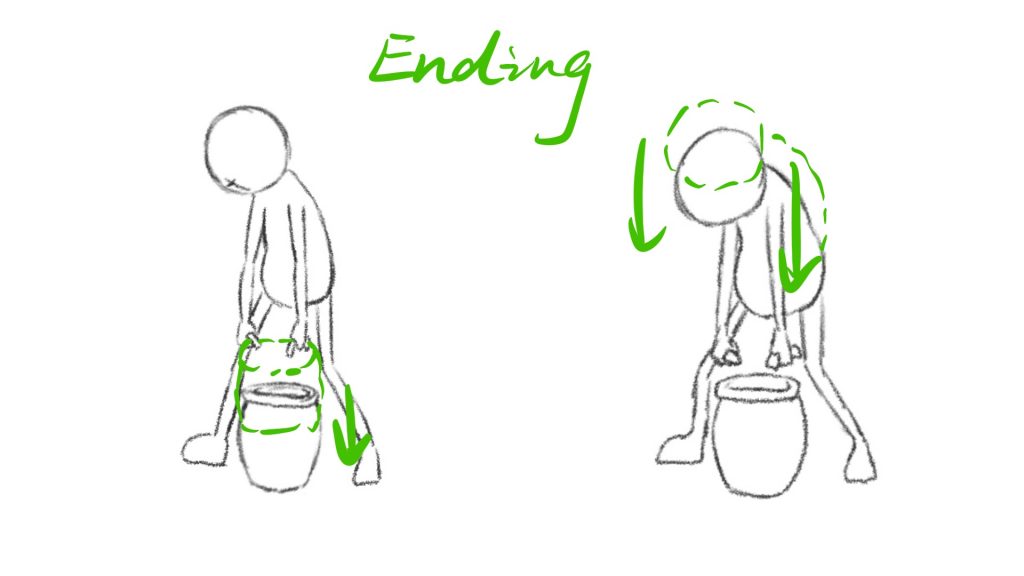
    After completing this animation, the teacher gave it a review. He praised the smoothness of the character’s movements but suggested some improvements for the ending. He thought it ended a bit abruptly, so, I added a scene where the basin fell to the ground. This change made the short animation look more complete and have more story-telling elements. This experience inspired me to consider whether the ending’s rhythm is comfortable and the story is complete in future animations, regardless of their length.

  • The Principles of Animation in The Princess and the Frog

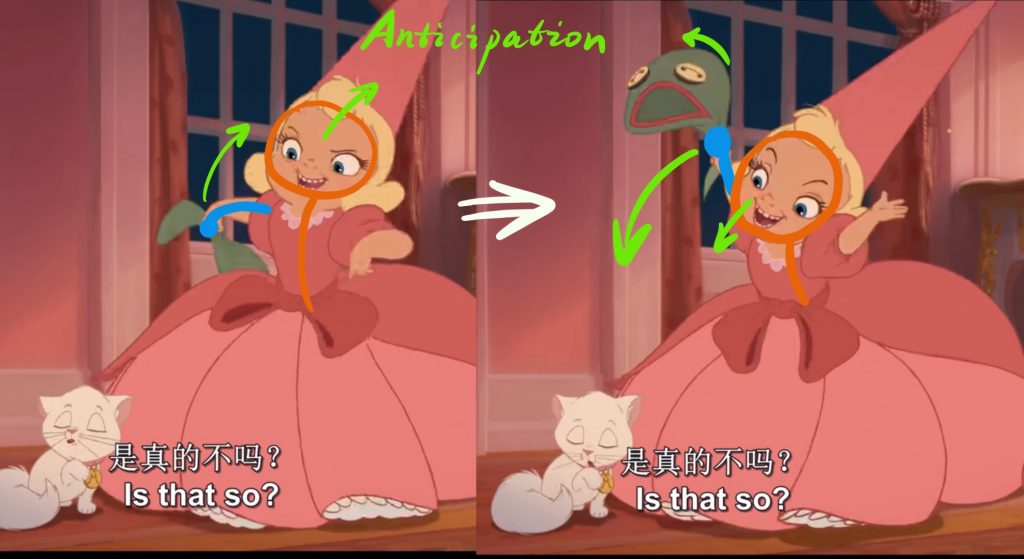
    The animation I selected is from the Disney movie “The Princess and the Frog”. The series of actions of the adorable Charlotte well demonstrate multiple principles of animation. 

    First, before putting the hat on the cat’s head, she has a large anticipation, which is to raise her hands high, better preparing to exert force to put the hat on the cat’s head.

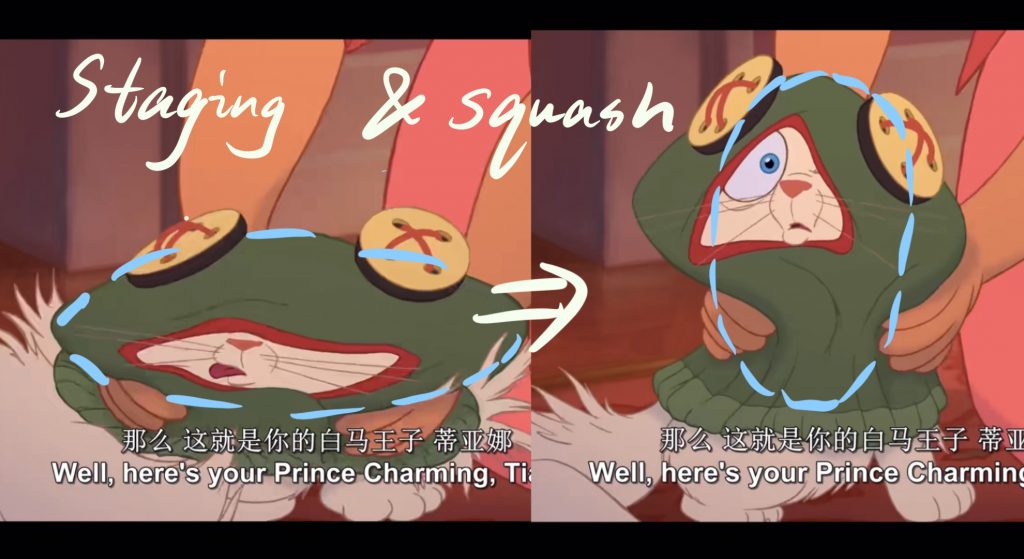
    At the same time, when the hat is placed on the cat’s head, the staging principle of animation is used, the camera quickly cuts to the cat, allowing us to clearly see the cat’s expression and more vividly feel the cat’s shock. At the same time, when the kitten was put on the hat, the entire body of the cat had a huge squash.

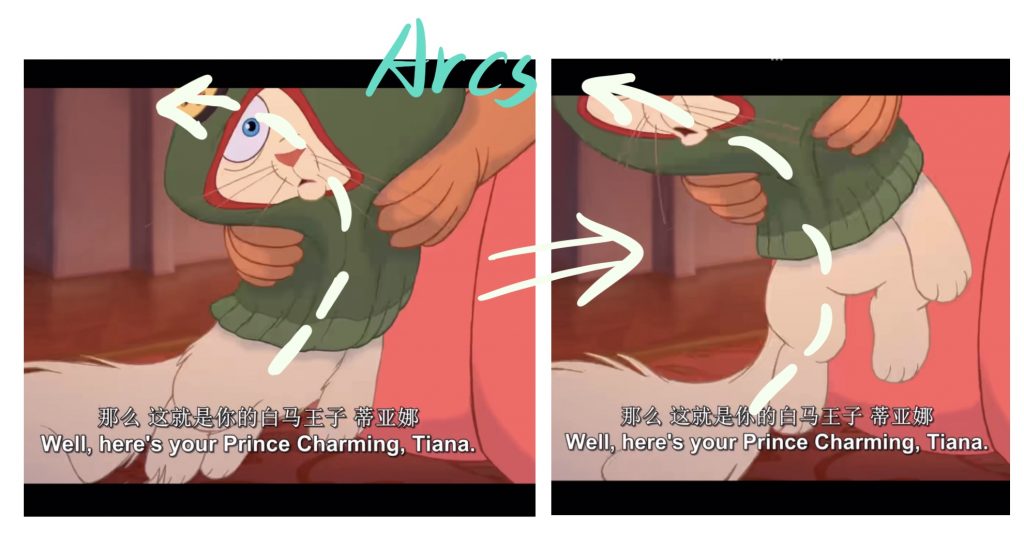
    When Charlotte lifts the cat, it can be seen that she does not lift it in a straight line but uses a forward arc. This demonstrates the  animation principle of arcs, making the action appear more natural and realistic.

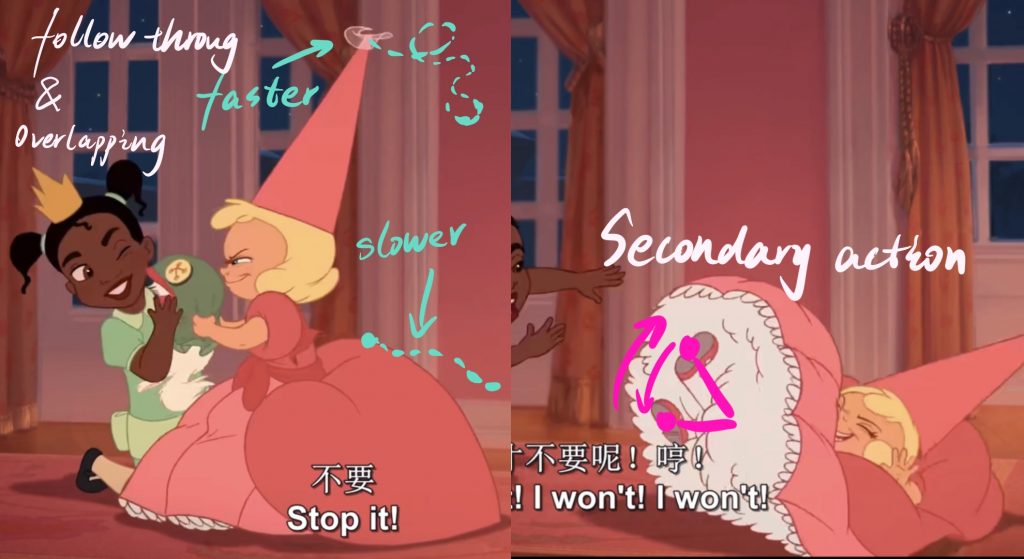
    When she makes the cat kiss Tiana, as her body moves, the ribbons on her hat and her dress both perform follow through and overlapping action. However, due to the different fabrics and weights of the ribbons and the dress, the ribbons’ follow-through movement is more flexible and faster than that of the dress. From this segment, we can directly perceive the material differences between the hat, the dress, and the ribbons.

    After Charlotte is pushed over by Tiana, we can see some secondary actions of her feet. Due to the fullness of her dress, she wobbles like a top after falling down, constantly shaking her feet to try to keep her balance. This secondary action reflects Charlotte’s liveliness and cuteness.

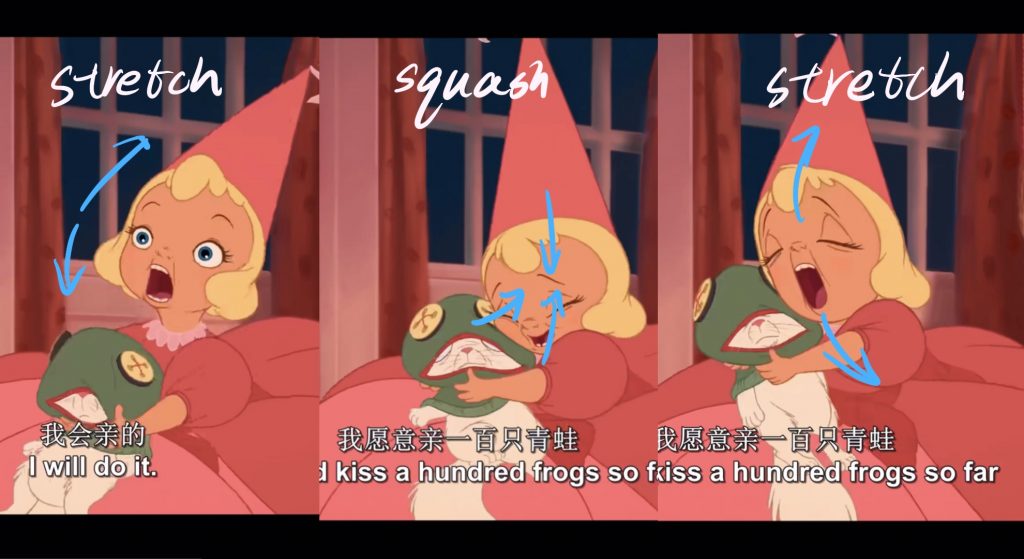
    The expression when Charlotte says “I’ll kiss a frog” well demonstrates the squash and stretch principle. Her eyes and face will compress or stretch along with the changes in her mouth shape. When she rubs her face against the cat, her cheeks also squash significantly, even covering her eyes. This series of squashes and stretches create an exaggerated and cute expression, reflecting Charlotte’s infatuated and adorable look.

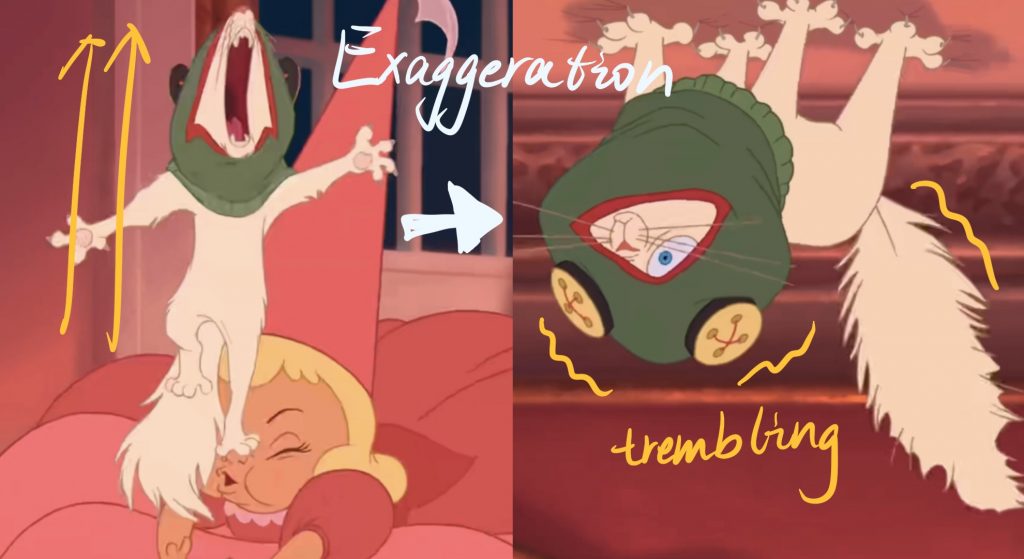
    When the cat can no longer tolerate Charlotte’s kisses and hugs, it kicks its legs a few times and then flies straight to the ceiling and stays there, with its fur standing on and trembling. These consecutive actions well demonstrate the  principle of exaggeration, magnifying the cat’s movements to better convey its fear and helplessness.

  • Simulated Work

    In this simulated work I was honored to collaborate with Jude. I was assigned to draw the background. My task was to design the forest where the main events of the story take place.

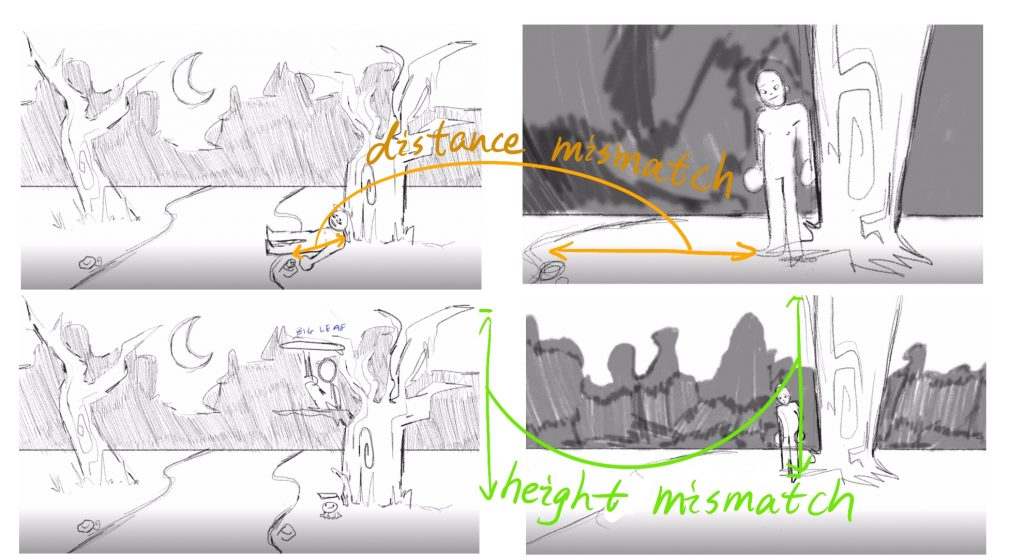
    Jude sent me the storyboard, which included some rough sketches of the forest. My job was to design a forest at night based on these sketches. During the design process, I noticed some issues with the layout. The backgrounds from different perspectives in the storyboard were not consistent. For instance, the distance from the river to the trees on the right varied, and the height of the main tree on the right was inconsistent. Moreover, the two main trees in the front seemed out of place compared to the dense forest behind them.

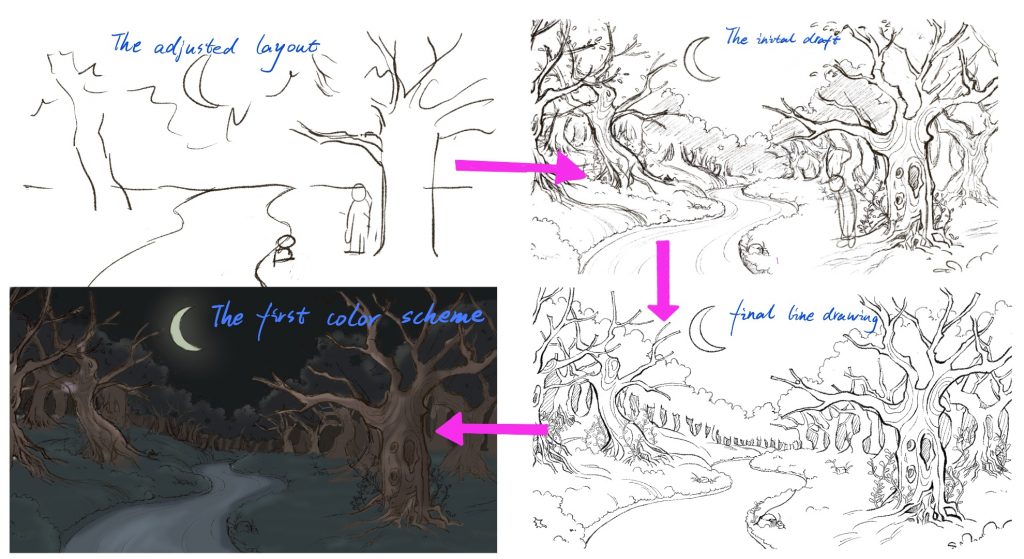
    After addressing these issues, I created the first draft of the line drawing, resolving the aforementioned problems, increasing the number of trees, and highlighting the two main trees. I also attempted the first color scheme.

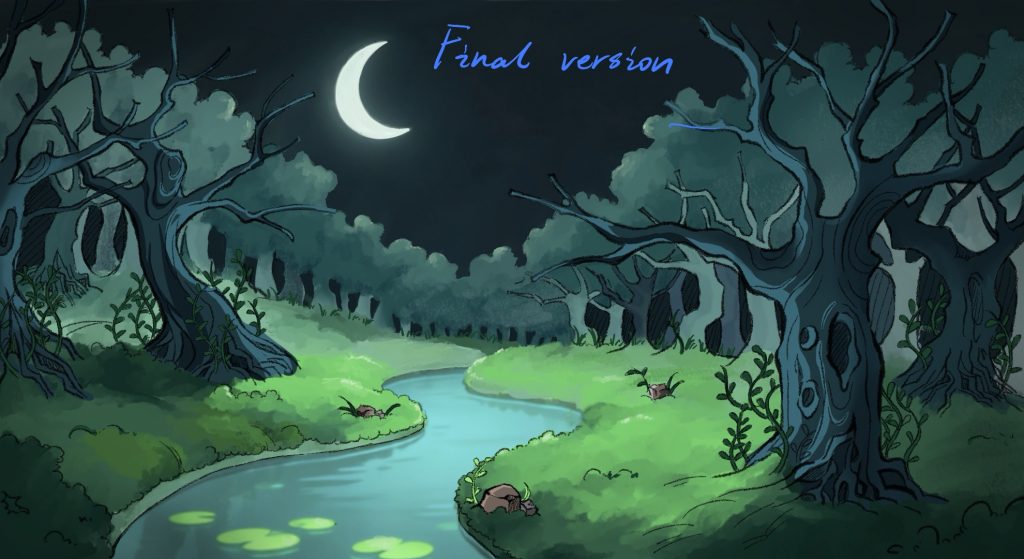
     After sending the first draft to Jude, she expressed satisfaction with my line drawing but suggested that the overall color scheme be brighter. She shared some reference images to help convey the mood she was aiming for. Based on her feedback, I revised the color scheme, which ultimately led to the final result.

    I really enjoyed the entire process, because I’m not very good at color matching, and through this simulated work, I made many attempts with colors and gained a deeper understanding of color coordination and light and shade contrast. My task this time was related to the scene designer in the industry, which gave me a systematic understanding of the job. First, I had to refer to the layout, clarify the position, proportion, and light and shadow of the characters in the scene, and ensure that the background and character movements were perfectly matched. Secondly, I had to layer the scene to facilitate dynamic effect processing in the later stage. Finally, I also had to design the color matching to achieve the most ideal effect for the author.

    In conclusion, this was a very meaningful experience. Jude is a very nice person and was clear and supportive in her communication. I learned a lot during this process. And also gained a deeper understanding of this industry.