The animation I selected is from the Disney movie “The Princess and the Frog”. The series of actions of the adorable Charlotte well demonstrate multiple principles of animation.
First, before putting the hat on the cat’s head, she has a large anticipation, which is to raise her hands high, better preparing to exert force to put the hat on the cat’s head.
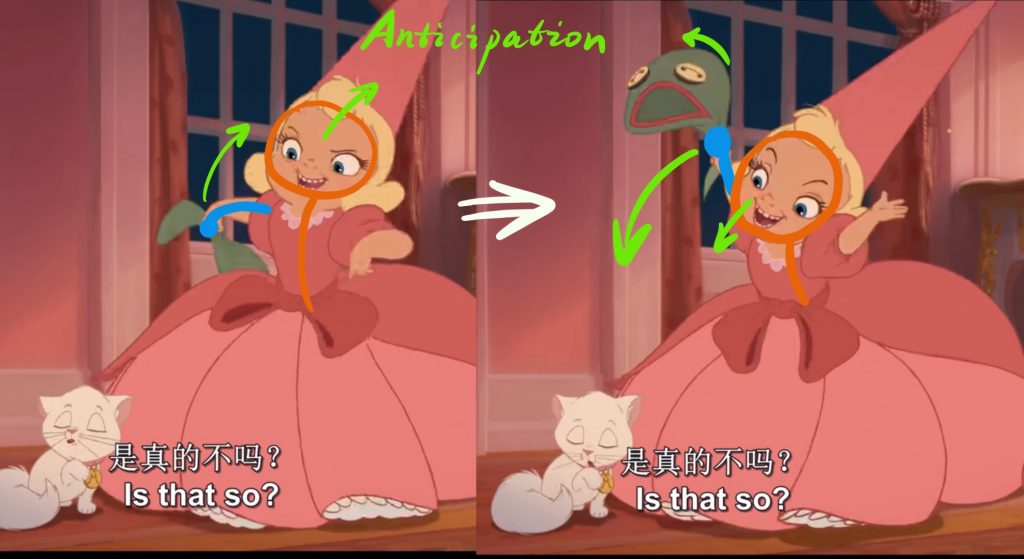
At the same time, when the hat is placed on the cat’s head, the staging principle of animation is used, the camera quickly cuts to the cat, allowing us to clearly see the cat’s expression and more vividly feel the cat’s shock. At the same time, when the kitten was put on the hat, the entire body of the cat had a huge squash.

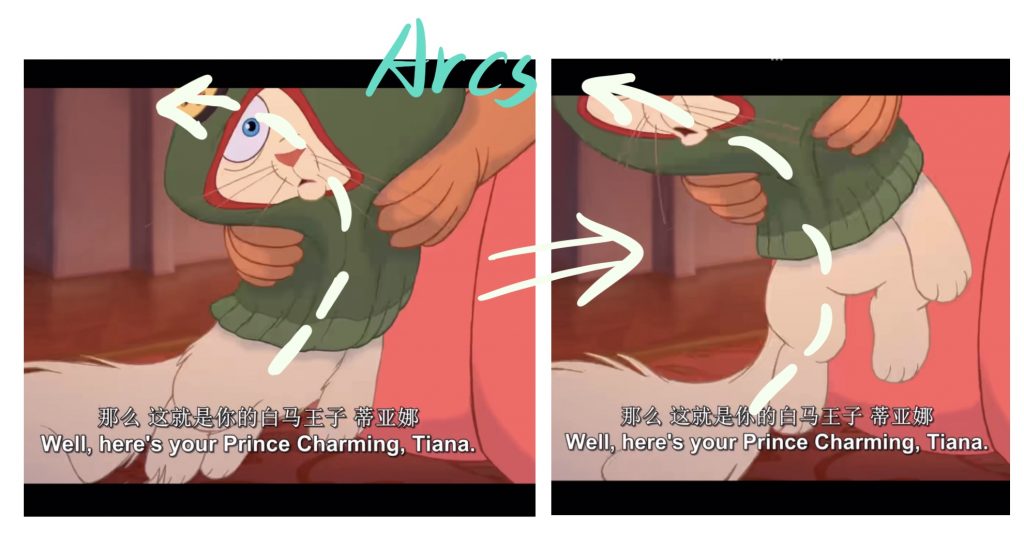
When Charlotte lifts the cat, it can be seen that she does not lift it in a straight line but uses a forward arc. This demonstrates the animation principle of arcs, making the action appear more natural and realistic.
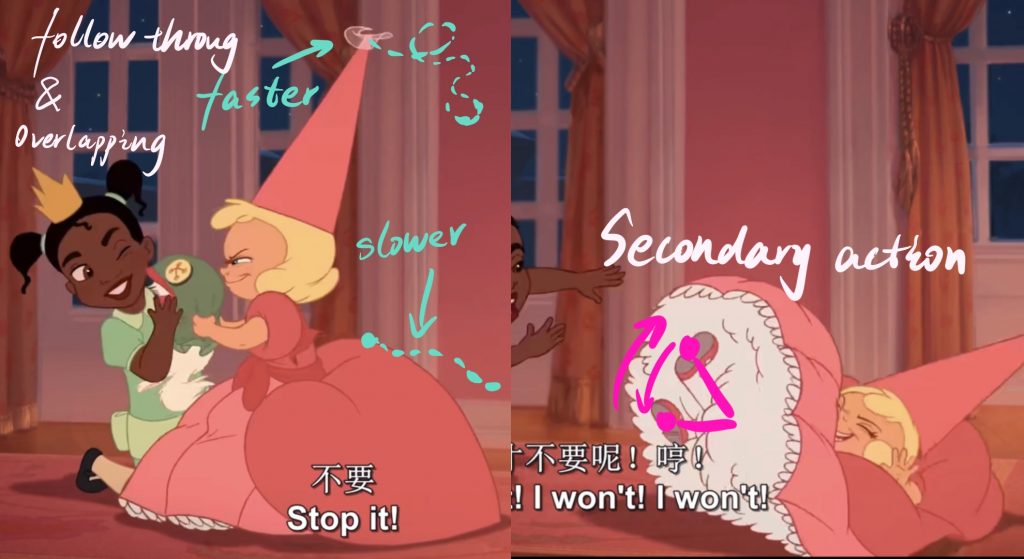
When she makes the cat kiss Tiana, as her body moves, the ribbons on her hat and her dress both perform follow through and overlapping action. However, due to the different fabrics and weights of the ribbons and the dress, the ribbons’ follow-through movement is more flexible and faster than that of the dress. From this segment, we can directly perceive the material differences between the hat, the dress, and the ribbons.
After Charlotte is pushed over by Tiana, we can see some secondary actions of her feet. Due to the fullness of her dress, she wobbles like a top after falling down, constantly shaking her feet to try to keep her balance. This secondary action reflects Charlotte’s liveliness and cuteness.
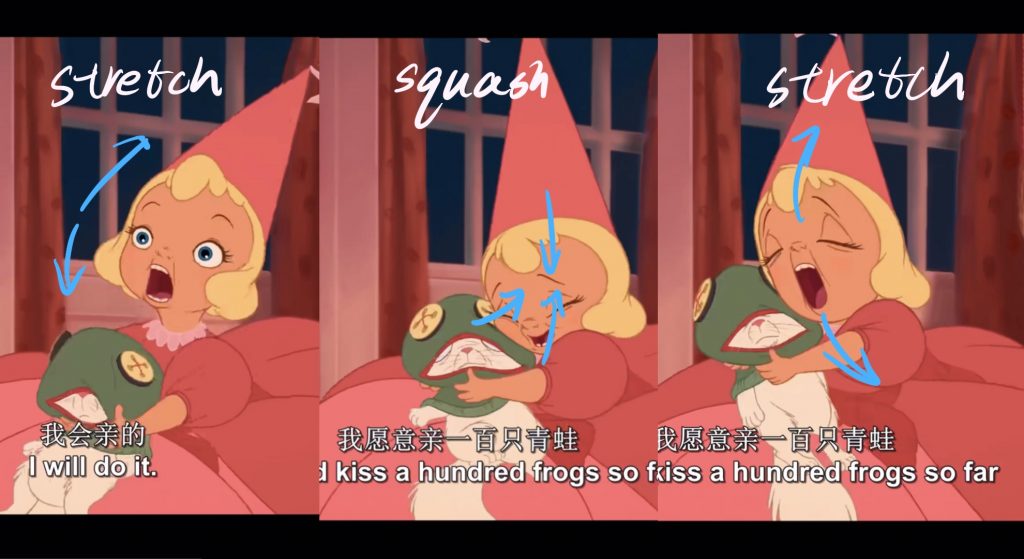
The expression when Charlotte says “I’ll kiss a frog” well demonstrates the squash and stretch principle. Her eyes and face will compress or stretch along with the changes in her mouth shape. When she rubs her face against the cat, her cheeks also squash significantly, even covering her eyes. This series of squashes and stretches create an exaggerated and cute expression, reflecting Charlotte’s infatuated and adorable look.
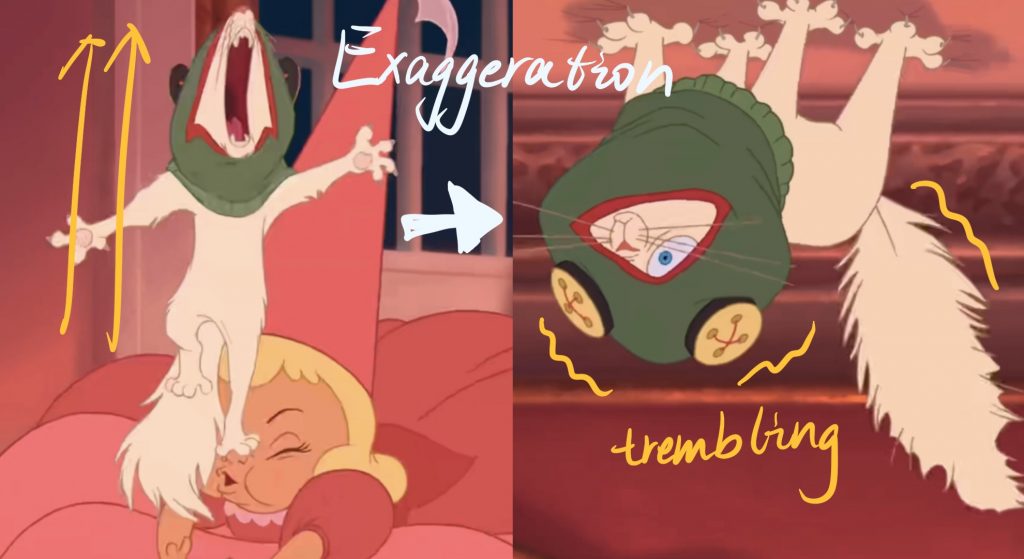
When the cat can no longer tolerate Charlotte’s kisses and hugs, it kicks its legs a few times and then flies straight to the ceiling and stays there, with its fur standing on and trembling. These consecutive actions well demonstrate the principle of exaggeration, magnifying the cat’s movements to better convey its fear and helplessness.
Leave a Reply