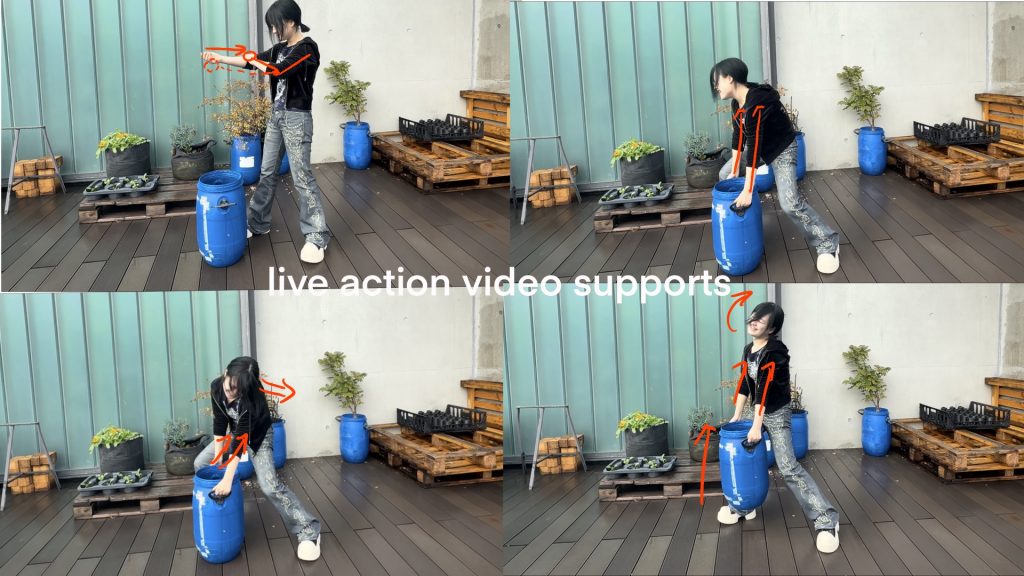
Before we started working on the push, pull and lift animations, the teacher asked us to go outside the classroom to record some live action video supports. My friend and I took turns filming each other. During the process, we kept giving each other suggestions, such as some movements were not exaggerated enough or not natural enough. Finally, with my friend’s advice and help, I recorded a satisfactory reference video. In the video, I would have anticipation before exerting force, and my movements would be very slow before lifting the bucket, which means the corresponding animation frames would need to be increased. I’m very grateful to the teacher for suggesting that we record reference videos. I think it has been of great help to our animation production. For example, I can capture the micro-movements of the characters in the video, which might be difficult to notice without a reference video. At the same time, the reference video can clearly show the movement trajectories of each part of the body, such as the head, chest, hands and arms, as well as the overall coordination. All of these can make the animation more realistic and vivid. In the future, I will also record more live action video supports for animation production.
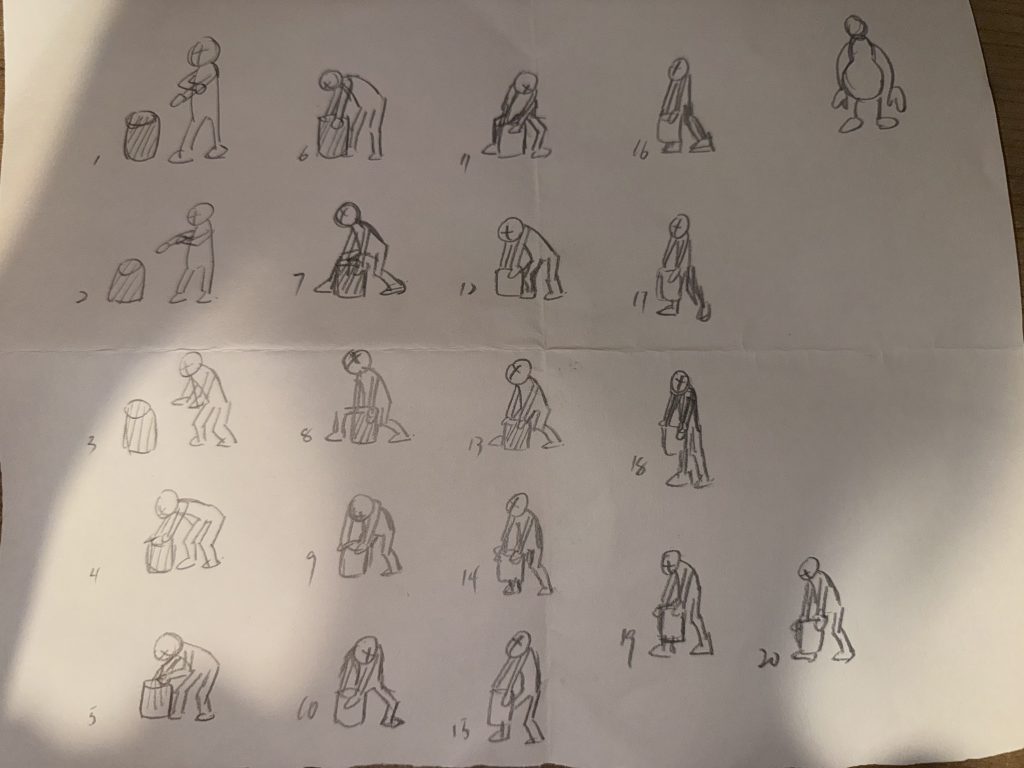
After completing the live-action video supports, I started working on the storyboard, drawing the key actions of the characters and then getting it confirmed by the teacher. The teacher approved my storyboard but suggested that the movements of the animated characters should be larger and more exaggerated than those of the actual characters. I took the teacher’s advice and after drawing the storyboard in TVPaint, I made some keyframe actions more exaggerated. For example, when the character bends down to gather strength, I made the body lower and the hands higher. And when the character lifts the bucket to the right, the movement was also more pronounced. After this modification, my animation improved significantly, making the originally somewhat ordinary scenes come alive immediately. This taught me that in future animations, I should try to modify the keyframes with large movements to make them look more exaggerated, which will make the animation effect better.
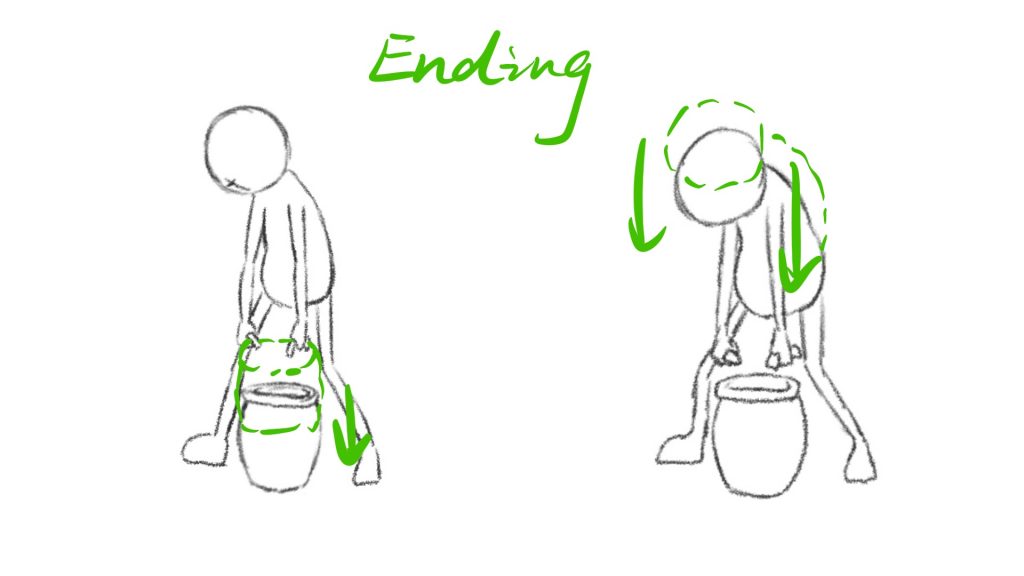
After completing this animation, the teacher gave it a review. He praised the smoothness of the character’s movements but suggested some improvements for the ending. He thought it ended a bit abruptly, so, I added a scene where the basin fell to the ground. This change made the short animation look more complete and have more story-telling elements. This experience inspired me to consider whether the ending’s rhythm is comfortable and the story is complete in future animations, regardless of their length.
Leave a Reply